Showing posts with label Fighter. Show all posts

Friday, November 7, 2014

Builds: The Brogue

The Brogue

The Brogue

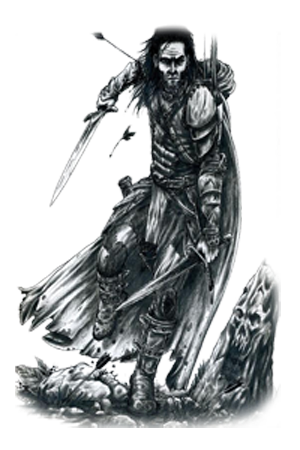
The Brogue is an old school two weapon style skirmisher that relies on teamwork to make sure he can hit. Two weapon style is not ideal unless you hit, so if you’re party looks to have a lot of teamwork/buffing/flanking built in (for example a summoner, a bard, and a cleric) the brogue can shine as a damage dealer. We start with lethal
weapons as we get our style down then move to non-lethal tactics when we get sap master to maximize damage.

Feats/Rogue Talents
Go human for 1/6th rogue talent favored class bonus for rogue levels 1-12 and for the Focused Study Alternate Trait.

Human Fighter 1 (Two Weapon Warrior):  Two-Weapon Fighting, Weapon Finesse, Skill Focus (Knowledge: Nature* or Knowledge: Local)
2:  Rogue 1: (Rake Archetype and Scout Archetype) (1d6 sneak)
3:  Rogue 2: Eldritch Heritage (Sylvan or Arcane depending on GM), Combat Trick: Sap Adept
4:  Rogue 3: (2d6 sneak)
5:  Rogue 4: Bludgeoner, Weapon
training: Weapon Focus (I like brass knuckles here as I can hold a wand
and still punch but any finessable blunt weapon will do)
6:  Rogue 5: (3d6 sneak)
7:  Fighter 2: Sap Master (double SA damage), Boon Companion or Improved Familiar (depending on GM’s ruling if Improved Familiar take a small critter like a Mephit)
8:  Rogue 6: Skill Focus: Intimidate, Snapshot and Bleed Attack
9:   Rogue 7: (4d6 SA damage) Quick Draw
10: Rogue 8: Offensive Defense
11: Fighter 3: Improved Two Weapon Fighting
12: Fighter 4: Weapon Specialization
13: Rogue 9: (5d6 SA damage) Dazzling display
14: Rogue 10: Opportunist
15: Rogue 11: (6d6 SA damage) Shatter Defenses
16: Rogue 12: Skill Focus: Perception, Skill Mastery, Hunter’s surprise
17: Rogue 13: Iron will
18: Rogue 14: Hard to Fool
19: Rogue 15: Great Fortitude
20: Rogue 16: Slippery Mind

Attributes
Dexterity>Charisma>Constitution>Wisdom>Intelligence>Strength.
Charisma should be 13, it doesn't need to be any higher, but it
shouldn't be any lower.
Point Buy 20
Str: 10
Dex: 18 (16+2)
Con: 14
Int: 10
Wis: 12
Cha: 13

Attribute increases should go into Dex or optionally Charisma, favored class bonuses should go into hit points when not going into rogue talents.

Skills
Max Intimidate, Use Magic Device, Perception, Disable Device, Stealth, possibly Bluff and spread the rest around to remain versatile. Equipment that shores up mental attributes can be key.

Traits
Reactionary (+2 Initiative)
Any trait that shores up will saves

Variables
This build is about damage stacking and action economy. You get a flanking companion from Eldritch Heritage. This assumes you have a Animal companion, if you instead have a Familiar you might want to go with
Evolved Familiar to give a Skilled +8 to UMD. Another option is to take Leadership if your GM allows, this would speed up the build to a 1 feat investment or alternately you can take a different bloodline power.

Tactics at Level…
Level 1: Flank with your teammates, use two normal finessable  weapons mostly, switch to one as needed if you have trouble hitting.
Level 3: You now have your own flanking buddy take full advantage, don’t switch to your blunt weapons yet. If you get an animal companion it is going to be a little weak until 7th level (-5 to the druid’s) but there are
plenty of good options until then. For the Familiar you have 3 options, goat and pig are both ok flankers, dodo is a flanker that gives you improved initiative but it is still a terrible choice.
Level 5: Switch to your knuckles now and feel free to hold a wand in one hand and a dagger to coup-de-gras in the other. You can also charge to lead off getting a sneak immediately thanks to scout archetype.
Level 7:  Build starts to come together with stronger SA then standard and a stronger flanker.
Level 9: Enemies now suffer 8 bleed a round when you hit, with Quickdraw, snapshot, and blunted crossbow bolts you can switch up at will and lay down some very fast hurt on the first round.
Level 12: Last fighter level getting you some more damage. Be sure to have a
variety of “brass” knuckles so you can adjust for different DRs
Level 13-16:  Gain some intimidation options including the awesome shatter defenses.
Level 17-20: At this point you are simply shoring up weaknesses

If you find yourself having issues hitting or you are against something immune to SA use your outstanding UMD and wand cast as your standard action, duck into cover and use stealth on your move action.

Thursday, September 19, 2013

Jeffcrunch: Schooled Swordsman

by Jeff Harris

Today we bring you one of Hamlets most distinctive scenes, the battle between Hamlet and Leartes. In the play is is mentioned that both were schooled in Luxembourg, which waqs at the time known for its fencing school. Thus the inspiration of this archetype.


Schooled Swordsman (Fighter)

There are many styles and forms of the martial art of the sword.  Swashbucklers and their rapiers, plate mailed paladins wielding great swords, dervish and their scimitars.  Yet there is no more a noble and celebrated sword style than that of the unarmored man wielding the war sword (long sword) and buckler.  Kings and aristocrats send their sons to formal fighting schools to ensure they can answer challenge with steel and calculating logic.  For those who call themselves graduates of these schools the art of the blade is a mirror for the political battles they fight just as often.  Thus the schooled swordsman is as dangerous with words as with a war sword.  Regardless of the nature of the battlefield, political or earthen, schooled swordsman (or swordswoman) are worthy allies and foes.  Those who find themselves as foe also find that a schooled swordsman leaves no opening unexploited and no mistake un-repaid.                                                                                                               

Skills: The schooled swordsman adds Bluff, Diplomacy, and Sense Motive to their class skill list.
Weapon and Armor Proficiency
A schooled swordsman is proficient with all simple and martial weapons as well as padded, quilted cloth, and leather armor.  A schooled swordsman is proficient with only the buckler and no other form of shield.

Canny Defense (Ex)
When wearing padded, quilted cloth, leather, or no armor, a schooled swordsman adds 1 point of Intelligence bonus (if any) per class level as a dodge bonus to their Armor Class while wielding a long sword. If a schooled swordsman is caught flat-footed or otherwise denied their Dexterity bonus, they also lose this bonus.

Strong or Swift (Ex) 
The schooled swordsman knows many secrets of the long sword, including how to use it more flexibly than most.  A schooled swordsman may treat a long sword as a finesse weapon for the purposes of applying feats and long sword may be substituted for scimitar for the purpose of gaining the Dervish feat.

Buckler Bash (Ex)                                                                                                                          
At1st level, a schooled swordsman can perform a shield bash with a buckler (use the same damage and critical modifier as for a light shield).

This ability replaces Bravery.          

Parry (Ex)
At 2nd level, a schooled swordsman learns to parry the attacks of other creatures, causing them to miss. Whenever the schooled swordsman takes a full attack action with the long sword, they can elect not to take one of their attacks. At any time before her next turn, they can attempt to parry an attack against themselves or an adjacent ally as an immediate action. To parry the attack, the schooled swordsman makes an attack roll, using the same bonuses as the attack they chose to forego during her previous action. If the attack roll is greater than the roll of the attacking creature, the attack automatically misses. For each size category that the attacking creature is larger than the schooled swordsman, the schooled swordsman takes a –4 penalty on the attack roll. The schooled swordsman also takes a –4 penalty when attempting to parry an attack made against an adjacent ally. The schooled swordsman must declare the use of this ability after the attack is announced, but before the roll is made.                                                                              

War Sword Training (Ex) 
At 3rd level, the schooled swordsman gains a +1 bonus on attack and damage rolls with the long sword. The bonus improves by +1 for every four levels beyond 3rd.

This ability replaces Armor Training 1, 2, 3 and 4.

Observant Combatant (Ex)
Starting at 4th level the schooled swordsman has seen enough men in armor to know that every armor has a gap.  The schooled swordsman may attempt to find the weakness of a foe’s defenses.  As long as the schooled swordsman’s perception check is equal to or greater than the targets Armor Class the schooled swordsman succeeds in finding a chink.   This grants the schooled swordsman the ability to target the opponents touch armor class for one round and make all attacks in that round at a +2 insight bonus to hit.  This ability does not affect those not using manufactured armor, and will only work once on a given target in a 24 hour period.  This ability may be used by the schooled swordsman a number of times equal to 3+the schooled swordsman’s intelligence modifier.

This ability replaces the 4th level fighter bonus feat.

Razor Tongue (Ex)
At 5th level the schooled swordsman learns that sometimes the best weapon in a fight is the one you are not expected to use.  The schooled swordsman may use his Bluff skill to mentally unbalance opponents in a fight.  A successful Bluff attempt causes the opponent to lose focus as you have struck a nerve with your words, causing that opponent to focus on you as a target and suffer a -2 on attack rolls against you as well as -2 Armor Class against your attacks.  This ability lasts for one round per two schooled swordsman levels you have, and may be used a number of times equal to 3+the schooled swordsman’s Charisma modifier.  As with observant combatant this ability may only affect a given target once in a 24 hour period.  The penalty the target takes increase by -1 for every 3 levels beyond 5th.

This ability replaces Weapon Training 1, 2, 3, and 4.   

Style Mastery (Ex)
At 12th level the schooled swordsman approaches the pinnacle of their art.  The schooled swordsman gains Shield Mastery as a bonus feat.  If the schooled swordsman has taken this feat, they may instead choose any other shield feat that may apply to a buckler as a bonus feat and need not meet the prerequisites for this feat.  Additionally anytime the schooled swordsman succeeds in a parry, they are granted a free attack of opportunity against that opponent as a riposte.

This ability replaces the 12th level fighter bonus feat.

Schooled Master (Ex)
At 19th level the schooled swordsman has nearly reached the pinnacle of their art.  This ability grants the schooled swordsman a reduction in the penalties for parries, reducing the size difference and adjacent ally penalties by -2.  Additionally anytime the schooled swordsman succeeds in a parry, the attack of opportunity gains an additional 1d6 damage, this damage is not considered precision damage for the purposes of reduction or immunity.

Weapon Mastery (Ex)
The schooled swordsman gains this ability at 20th level as normal fighters do, but in the case of the schooled swordsman they may only apply this ability to the long sword.  Otherwise this ability functions as written in all other ways.