Showing posts with label Frank Gori. Show all posts

Wednesday, July 5, 2017

DJ (dungeon jockey) Bring that Beat Back!

As of 9 AM EST tomorrow the newest offering from TFPG games, Into the Breach: The Bard and it's companion book, Tides of War: Bard/X Feats both go on sale via Drivethru RPG's site.  Look for ItB: The Bard and Tides of War: Bard/X Feats to be available from PFRPGD20.com and Paizo.com online stores shortly.

And never forget, if you stop singing, your friends DIE!


Belt it out baby!

Thursday, April 21, 2016

Questions about Class: the Rogue


Greetings fine readers, it is my, Frank Gori’s, first go as questioner in our ongoing series Questions about Class.  For this installment we are interviewing esteemed Flying Pincushioner David McCrae as we prepare to release Into The Breach: The Rogue and Tides of War: Rogue/X Feats..

FG: First off, thanks a lot for taking the time to let us pick your brain and for all the times you’ve been the “guy behind the mic.”

DM: No problem at all. I’m completely stoked for these two releases. And you guys know you can always count on me to step forward when I’m able to!

FG: Please, tell us a little about yourself and your contributions to Flying Pincushion.

DM: I hail from New Jersey, USA. I’m the author of 2 novels, and currently in the process of drafting my third. For Flying Pincushion, I’ve been developing the “Tides of War: Class/X” Feat books. I also have several archetypes and an alternate class submitted for more of the upcoming Into the Breach books. For Into the Breach: Rogue, I designed the Booksmart Scout, Honeypot, and (my favorite) the Trickster Chef.

FG: Rogues are one of my jams but I often end up in debates about the value of a rogue over say a bard or vivisectionist or even the investigator, what makes rogues unique and worth playing over other similar themed classes?

DM: Sometimes it’s hard to make a case for the rogue against classes such as those since those three classes have access to spells and extracts. I think that sometimes the only people who really understand the usefulness of the Core Rogue are the ones who look at what the class has to offer and strive to make it work as designed. I feel power creeping plays a huge factor into why many find the core rogue unappealing. If it doesn’t wreck bad guys consistently, it’s not worth a second look to many. But those who understand that playing a rogue is not about “wrecking bad guys” find them much more fun to play.

FG: I’ve seen a lot of debate over the traditional way to play a rogue so I’m curious what makes a rogue a rogue to you? Is there some sort of needed roleplaying trait or cannot lose class feature that makes a rogue a rogue for you?
DM: Roleplaying is HUGE for rogues. Their ability to be a party face stands right on par with the bard. But what really makes the rogue can be summed up in three words: Talents, talents, talents! The Rogue talents, like Alchemist discoveries for example, allow full and complete customization. Does your rogue talk the party out of fights? Does it use poisons? Does it blend in the shadows? How about using spell-like abilities? Does it do all four, and then some? This treasure trove of options to make effective, efficient rogues.

FG: Is there a best rogue build?

DM: As silly as this is going to sound at first, the best rogue build is the one you build for yourself and your party. Different parties have different needs. And no party, let alone single character, can be prepared for every possible situation. I like to play and grow my rogue to meet the party’s needs; pick up slack where others lack. In many cases, it’s becoming the party face.

FG: From an optimization standpoint what’s your favorite rogue trick?

DM: 3 simple feats: Skill Focus (Bluff), Combat Expertise, and Improved Feint. Nothing frustrates me more than to see a person playing a rogue trying to dictate where the other players should move during their turn just because they want to flank and get their sneak attack damage. Improved Feint allows you to do all the sneak attacks you want, without having to divert others from where they need to be or what they need to do.

FG: Is there a class dip that compliments the rogue well in particular?

DM: I can mention 10 classes a rogue can dip into, but then I’d be shamelessly plugging Tides of War; Rogue/X (haha). Really, though, I think bard is a shoe-in dipping class. It allows you to still maintain your party-face, grants you party buffs via bardic performances, and still gives you 6 +INT skill ranks per class level. Not to mention the spellcasting capabilities.

FG: You’re trying to sell someone on the idea of trying a Rogue, but they seem reluctant. What do you tell them?

DM: I think it’s easier to sell the idea to people who are accustomed to playing ¾ BAB classes and/or classes with only 1 good save. You would hear a lot of “Muh damage output!” and “Muh Will save!” if you were to try and convince the heavy hitters and the spell-slingers that a rogue is a good direction to take.

For someone who likes their damage output, direct them to options that optimize sneak attack, as well as the high skill ranks. Plenty of room to fit in Acrobatics to avoid those attacks of opportunity, and Bluff to more effectively feint, therefore making your ability to score sneak attack damage more consistent.

For spellcaster players it might be a little tougher. But Use Magic Device being a Charisma-based skill, a rogue can take Skill Focus (UMD) and optimize for Charisma. This way, they can stash wands and just UMD them when they want to cast a spell. Think of it like having 50+ spells per day.

FG: What makes the Rogue fun to play?

DM: Let’s not kid ourselves: there is a certain thrill you get when you’re rolling an extra 2, 3, 4, 5 dice when you deal damage for sneak attacks. But what makes playing a rogue more fun are those moments where you’ve helped that party make great progress without even having to draw a weapon. Bluffing your way through an encounter; sneaking past guards and dispatching them stealthily. Many encounters I’ve seen made easier or completely circumvented using a rogue’s skills, and it’s often hysterical.

When the rogue picks a lock, opens the door, and hears, “Who’s there?”...

And the rogue’s response is, “Housekeeping!”...

And the enemy believes it long enough for the rogue to get in close, dirty trick (blind), then shank for +4d6 sneak attack and drow poison to knock them out and steal all their gear...

...comedy gold that I don’t think many, if any, other classes can replicate.

FG: What do you feel is, bar-none, the most useful class feature of the Rogue?

DM: I’ll reiterate: the talents! Bar-none. Talents are what can make each individual rogue unique in the same sense bonus feats makes unique fighters, and discoveries make unique alchemists. The talents have such a wide variety of boons, bonuses, and effects, you could make a multitalented jack-of-all-trades just as easily as a well-optimized powerhouse.

FG: If there was one thing you could change about the Rogue class, what would it be?

DM: Fortitude save. Give the rogue a Fortitude save. Rogues deal with poisons and such things. They should have the Fortitude save to better protect themselves if they don’t feel the need to invest in Poisoner archetype.

FG: Thanks David for letting us interrogate you?

DM: Well, it was a successful interrogation for you! I know you had Zone of Truth up! You’re quite welcome all the same! ^.^

Wednesday, January 6, 2016

The Buying Game, or "How I Learned to Love the Market Again"


The shopping trip, it happens in every TTRPG, whether it is a tiny town's general store, all the way up to high end magic shops in metropolitan cities, players are guaranteed to frequent such places.

But, you ask, how do I avoid the eye rolls and groans that come with extended trips of this type?  Let us be honest, sometimes those "short" shopping trips turn into full session pace breakers.  

The simply answer is, make shopping more exciting, and weave the store into the plot, or give the store a plot of its own.  This is exactly what The Flying Pincushion Games new product line "Mystical Marketplaces" looks to do.  It is all too easy for GM's (I have done this myself) to hand wave shops and buying to a mechanical and book keeping level, which is not all that fun for anyone involved.  

Mystical Marketplaces addresses this problem by providing vividly detailed shops and locations, run by interesting and three dimensional proprietors with their own stories and motivations. Add that to quests and task that are shop specific, and an easy to use barter and patronage system, and we go from a bland "get it done and over with" shopping trip to a multifaceted adventure opportunity that also happens to have the option to purchase gear, some of which is unique to the shop.  All of this adds up to a deeper immersion into the game world for the players, less work and more adventure hooks for GM's, and a more memorable game session for everyone involved.

Look for the first installment of Mystical Marketplaces, "The Brass Drake" to be up for sale from such well known RPG store sites as DriveThruRPG, Paizo.com, and PFSRD20.com in the near future.  Best of all, "The Brass Drake" is only the first of what will be a sizable catalog of unique, flavorful, time saving, and fun stores and shops for your PC's to explore.  Oh, and at a very reasonable price too!

Cheers!

Jeff Harris
The Flying Pincushin Games Co-Owner 
 

Thursday, July 2, 2015

Check out the Wardens of the Wild: A lorebook of elves Kickstarter

A massive game sourcebook expanding on elven PC options in any game you play, but specifically designed for Pathfinder and 5e Fantasy.


Hello Flying Pincushion Fans,

You might see a few familiar names in the stretch goal for this fun project from TPK Games. Consider contributing for exciting expanded content. Brian Berg has kickstarter experience and a very solid reputation, a glimpse behind the scenes tells me you're not going to want to miss this one.

Sincerely,
Frank Gori
Co-founder
Flying Pincushion Games


Monday, November 10, 2014

Suggestions from a GM that allows the Leadership Feat

The Arm's Commander


GM_Solspiral’s approach on utilizing the Leadership Feat at your table without breaking your game.


Introduction: I see it all the time on just about every Pathfinder board and blog, no sane GM allows the Leadership Feat. It left me with two choices, I could accept that as a comment on my sanity or explain why and how the Leadership Feat can be a GM’s best friend.


To do that we’re going to have to deal with that fellow hanging out below this line of text.


Leadership can be quite OP, I do in fact see the pink elephant in the room. On paper the player gets to trade in one feat for a minimum of 1 additional character sheet and likely more of feats and actions. A high Charisma character with the leadership feat could well turn into a quasi summoner and to borrow a term from online gaming LAG the SERVER!


Basically this guy:


The first step in taking care of any problem is recognizing the problem and the facts are that if we allow it as GMs players will abuse the rules and with the Leadership Feat that is not a difficult matter. I see it and I get why folk don’t bother but there is one very good reason to not throw the baby out with the bathwater and that is this…


Players with the Leadership Feat are typically much more invested in the game. They care about the story, they care about their cohorts, and they care about their followers (or basically lose them by the mechanics of the feat.) As a GM you have at least one NPC that your player cares enough about to actually listen to and that character can have any number of motives and plot hooks attached to it to draw the PCs ever deeper into your plot.


Here’s a few reasons beyond player engagement to consider:
-Cohorts are a great way to let a player that gets bored with their PCs a way to change out characters as needed in the story (simply flip cohort and character.)
-If a player dies the Cohort can serve as a backup if the intention is to resurrect the fallen PC.
-Cohorts can handle roles no one else at the table wants to play that might be necessary (like being the party healer.)
-Cohorts and followers can divert a wealthy PCs resources into something other than making themselves an optimized Frankenstein.
-Cohorts can absorb some damage if you are prone to “throwing hard” or can be a way to work out some logistics in a dungeon crawl (like guarding the door out for example.
-Cohorts are a great way to incorporate inconsistent players who weave in and out of the game because of scheduling difficulties.
-If you're table is short of having enough players.


I’ll get more into cohorts in a bit. I want to talk about followers next.


A simple houserule with followers can be this: the player has to provide some sort fo reason and structure for the followers to attract them. This can be a ship, caravan, business, or castle, the bottom line is people aren’t going to drop everything and follow your hero without some sort of livelihood.


I’d also encourage the following restrictions:
-No magic item sweatshops
-No body doubles among the followers, a follower isn’t there to take an assassin’s arrow for you.
-Followers take at least 50% of the income they generate.
-No daisy-chaining leadership (a cohort cannot also be a leader unless the PC is swapping prime characters.)


Back to cohorts, again some simple restrictions make this work a little better.
-Only 1 cohort can act in a round if the party has multiple instances of the Leadership feat, unless the GM has specified otherwise.
-Cohorts do not gain their own wealth by level.
-Cohorts level with the PC they are attached to and act on the same initiative.
-Cohorts can only share a primary class with the PC they are attached to, basically your PC doesn’t attract followers that are too similar to the other party members your character already travels with.


We can have nice things…
There’s a social contract when you game with someone. As a GM your role is to facilitate the telling of a good story and keeping your players entertained. When there’s conflict you are the arbiter, you get to run the show and essentially play god and in exchange you do the bulk of the work of making the game function. This means talking to players that are ruining other people’s good times or accepting that sometimes your own fun needs to take a back seat. At the end of the day your players are the stars of the show, you’re the director this needs to be a give and take.


As a player it is your job to fulfil your role in the story (typically the hero) and have a good time. You are responsible for one thing, not letting your good time harsh on everyone else’s. This occasionally means letting the other players have the spotlight. This means making a character that others will enjoy, not just you. Optimization is an excellent way to entertain yourself outside the game, it is a rather boring way to play it unless you really like playing games in easy mode.

When players and GMs can be reasonable and responsible you can play a drow, or have the leadership feat, or even play with mythic characters. We can have nice things if we all agree beforehand not to break them.

***Thanks to Wheldrake for the suggestions.

Friday, November 7, 2014

Builds: The Brogue

The Brogue

The Brogue

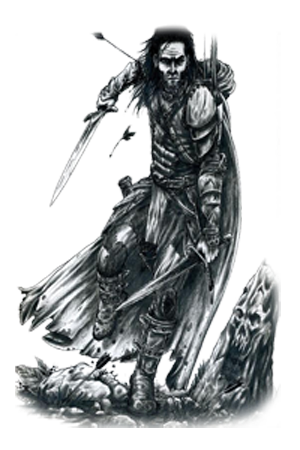
The Brogue is an old school two weapon style skirmisher that relies on teamwork to make sure he can hit. Two weapon style is not ideal unless you hit, so if you’re party looks to have a lot of teamwork/buffing/flanking built in (for example a summoner, a bard, and a cleric) the brogue can shine as a damage dealer. We start with lethal
weapons as we get our style down then move to non-lethal tactics when we get sap master to maximize damage.

Feats/Rogue Talents
Go human for 1/6th rogue talent favored class bonus for rogue levels 1-12 and for the Focused Study Alternate Trait.

Human Fighter 1 (Two Weapon Warrior):  Two-Weapon Fighting, Weapon Finesse, Skill Focus (Knowledge: Nature* or Knowledge: Local)
2:  Rogue 1: (Rake Archetype and Scout Archetype) (1d6 sneak)
3:  Rogue 2: Eldritch Heritage (Sylvan or Arcane depending on GM), Combat Trick: Sap Adept
4:  Rogue 3: (2d6 sneak)
5:  Rogue 4: Bludgeoner, Weapon
training: Weapon Focus (I like brass knuckles here as I can hold a wand
and still punch but any finessable blunt weapon will do)
6:  Rogue 5: (3d6 sneak)
7:  Fighter 2: Sap Master (double SA damage), Boon Companion or Improved Familiar (depending on GM’s ruling if Improved Familiar take a small critter like a Mephit)
8:  Rogue 6: Skill Focus: Intimidate, Snapshot and Bleed Attack
9:   Rogue 7: (4d6 SA damage) Quick Draw
10: Rogue 8: Offensive Defense
11: Fighter 3: Improved Two Weapon Fighting
12: Fighter 4: Weapon Specialization
13: Rogue 9: (5d6 SA damage) Dazzling display
14: Rogue 10: Opportunist
15: Rogue 11: (6d6 SA damage) Shatter Defenses
16: Rogue 12: Skill Focus: Perception, Skill Mastery, Hunter’s surprise
17: Rogue 13: Iron will
18: Rogue 14: Hard to Fool
19: Rogue 15: Great Fortitude
20: Rogue 16: Slippery Mind

Attributes
Dexterity>Charisma>Constitution>Wisdom>Intelligence>Strength.
Charisma should be 13, it doesn't need to be any higher, but it
shouldn't be any lower.
Point Buy 20
Str: 10
Dex: 18 (16+2)
Con: 14
Int: 10
Wis: 12
Cha: 13

Attribute increases should go into Dex or optionally Charisma, favored class bonuses should go into hit points when not going into rogue talents.

Skills
Max Intimidate, Use Magic Device, Perception, Disable Device, Stealth, possibly Bluff and spread the rest around to remain versatile. Equipment that shores up mental attributes can be key.

Traits
Reactionary (+2 Initiative)
Any trait that shores up will saves

Variables
This build is about damage stacking and action economy. You get a flanking companion from Eldritch Heritage. This assumes you have a Animal companion, if you instead have a Familiar you might want to go with
Evolved Familiar to give a Skilled +8 to UMD. Another option is to take Leadership if your GM allows, this would speed up the build to a 1 feat investment or alternately you can take a different bloodline power.

Tactics at Level…
Level 1: Flank with your teammates, use two normal finessable  weapons mostly, switch to one as needed if you have trouble hitting.
Level 3: You now have your own flanking buddy take full advantage, don’t switch to your blunt weapons yet. If you get an animal companion it is going to be a little weak until 7th level (-5 to the druid’s) but there are
plenty of good options until then. For the Familiar you have 3 options, goat and pig are both ok flankers, dodo is a flanker that gives you improved initiative but it is still a terrible choice.
Level 5: Switch to your knuckles now and feel free to hold a wand in one hand and a dagger to coup-de-gras in the other. You can also charge to lead off getting a sneak immediately thanks to scout archetype.
Level 7:  Build starts to come together with stronger SA then standard and a stronger flanker.
Level 9: Enemies now suffer 8 bleed a round when you hit, with Quickdraw, snapshot, and blunted crossbow bolts you can switch up at will and lay down some very fast hurt on the first round.
Level 12: Last fighter level getting you some more damage. Be sure to have a
variety of “brass” knuckles so you can adjust for different DRs
Level 13-16:  Gain some intimidation options including the awesome shatter defenses.
Level 17-20: At this point you are simply shoring up weaknesses

If you find yourself having issues hitting or you are against something immune to SA use your outstanding UMD and wand cast as your standard action, duck into cover and use stealth on your move action.

Builds: Drive by Skirmisher

Drive By Skirmisher


Drive By Skirmisher

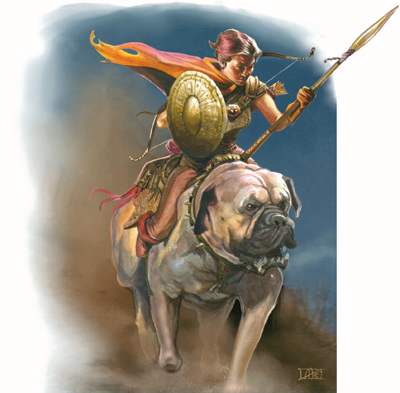
As implied by the name the Drive By Skirmisher is a hit and run specialist that takes advantage of mounted combat. We’re going to be a small race and dip 4 levels of cavalier for some truly impressive power-ups. Your GM will have nightmares about this build.


Feats/Rogue Talents
Halfling, Gnome, and Goblin top my list as favorites for this build.The main key is small size everything else is simply a bonus, though I will point out halflings have a great alternate racial trait called outrider that adds
a +2 to handle animal and ride checks which is where I’ll start.

Halfling Cavalier 1 (Strategist Archetype/Order of Flame): Mounted Combat (go with the Wolf), Stealth Synergy (Teamwork Feat)
2:  Rogue 1: (Swashbuckler and Scout Archetypes) (1d6 sneak)
3:  Rogue 2: Dervish Dancer, Finesse Rogue
4:  Rogue 3: (2d6 sneak)
5:  Rogue 4: Ride by Attack, Combat Trick (Power Attack)
6:  Cavalier 2: Order ability Foolhardy Rush
7:  Cavalier 3: Spirited Charge
8:  Rogue 5: (3d6 sneak)
9:   Rogue 6: Boon Companion, Weapon Training (Weapon Focus: Scimitar)
10: Rogue 7: (4d6 SA)
11: Cavalier 4: Cleave
12: Rogue 8: Combat Trick (Trick Riding)
13: Rogue 9: Indomnible Mount, (5d6 SA damage)
14: Rogue 10: Feat Mounted Skirmisher
15: Rogue 11: Amature Swashbuckle (Parry and Reposite) (6d6 SA damage)
14: Rogue 12: Skill Mastery
17: Rogue 13: (7d6 SA damage) Extra Panache
18: Rogue 14: Crippling Strike
19: Rogue 15: (8d6 SA damage) Pommel Strike Deed
20: Rogue 16: Confounding Blades

Attributes
Dexterity>Constitution>Strength>Charisma>Intelligence>Wisdom.
Ultimately we want Strength for Power attack and cleave.

Point Buy 20
Str: 12 (14-2)
Dex: 18 (16+2)
Con: 14
Int: 10
Wis: 10
Cha: 12 (10+2)

Attribute increases should go into Strength to 13 then Dexterity, Favored class bonuses should go into hit points or skill points as you need.

Skills
Max Ride, Use Magic Device, Perception, Disable Device, Stealth, possibly Bluff and spread the rest around to remain versatile. Equipment that shores up mental attributes can be key.

Traits
Reactionary (+2 Initiative)
Any trait that shores up will saves

Variables
This build helps you keep your wolf alive for no real trade off in action economy and most importantly lets you deal massive amounts of damage utilizing spirited charge and sneak attack while mounted, then you
simply ride on by forcing the enemy to make a move action to fight back (if they live.) A nasty alternative to this could well be going lance instead, or switching up for some archery fun.

Tactics at Level…
Level 1: Your wolf is better than you, sucks for a level.
Level 3:  You hit well but are more likely to use your wolf as a flanking buddy at this stage.
Level 5: You main tricks are paying out, you get SA on a charge and your mount can continue it’s double move.
Level 7: Build starts to come together with mounted charge making sure you can hit things well and spirited charge making sure that the damage is outstanding
Level 9: Boost to hit ability and Animal Companion.
Level 10-15:  All about grabbing the extras of mounted combat.
Level 16-20: Panache for personal defense.

If you find yourself having issues hitting or you are against something immune to SA use your outstanding UMD and wand cast as your standard action, duck into cover and use stealth on your move action.