Showing posts with label Pathfinder. Show all posts

Wednesday, November 23, 2016

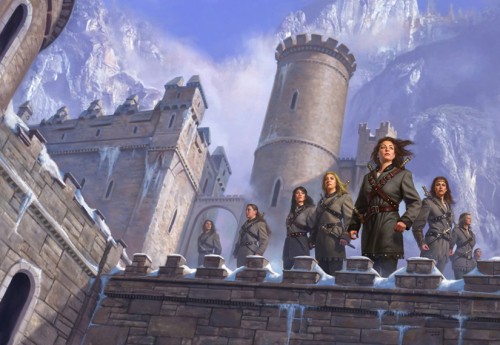
And the people did feast upon the lambs, and sloths, and carp!

Whether your Thanksgiving looks something like this...


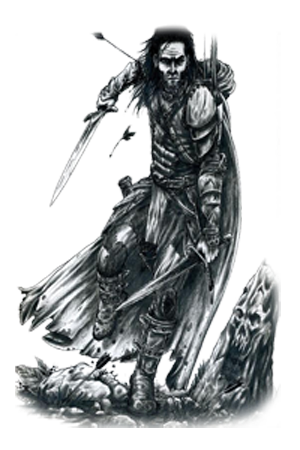
Or on the other side of things...like this....


Regardless...

HAPPY THANKSGIVING!
From all the folks at The Flying Pincushion.

Tuesday, October 27, 2015

Questions About Class: the Inquisitor


Welcome back readers! Here is another entry in our Questions about Class series, this time focusing on the inquisitor. As you may (or may not) know, Flying Pincushion Games is about to release its next book, Into the Breach: The Inquisitor.  So we thought it was a good time that I, Kiel Howell, sit down with fellow Pincushioneer Jeffery Harris to talk about the class.

KH: First of all, thank you for taking the time to sit down and answer these questions!

JH: My pleasure Kiel, thank you for taking the time to lay down some excellent questions about the inquisitor class!

KH: Can you give the readers a little about yourself and your role at The Flying Pincushion?

JH: Well sure, I am of course Jeff Harris, co-owner, CFO, sometimes editor and lead designer here at The Flying Pincushion.  I have been gaming for more than 24 years, but have only been in the industry officially for about two and a half years.  I am married to a lovely wife and live in a house with as many cats as there are core classes.

KH: So what exactly is an inquisitor? Is it someone who tortures folks for religious reasons (ala Torquemada and the Spanish Inquisition)?

JH: The Spanish Inquisition is likely the default, go to, idea that many folk have.  Thankfully the inquisitor in Pathfinder need not fall into this trope.  While they can be zealous religious fanatics, there is an infinite variety of ways to see the class.  From skilled detectives of the many goods, to vengeance sworn monster hunters.  With the right inspiration and  careful building/character design, inquisitors can be nearly anything the player can brain storm up a story for.

KH: Why does this stand as a whole class to you? Would it have been better as an archetype of the Paladin or perhaps a type of Cleric?  Personally I think the inquisitor stands up very well as a class of its own.  

JH: While a paladin could be a zealous hound of the faith, their paladin code would restrict them from accomplishing any dirty or nasty deeds that need doing.  Conversely clerics seem to (as a class) trade much of their ability to be a skilled character out for their powerful magic and domain powers.  That is not to say a cleric cannot be a skilled character, as a class it is simply not their main focus.  Thus the inquisitor seems to fall somewhere in between, with more divine power than a paladin in terms of spells, but less combat ability, and far more skill breadth than a cleric, but with less divine magic.  Overall the class seems to have a little bit of both paladin and cleric, merged with the practical mindset and broad skills set of rogues.

KH: What exactly are judgments and what are they supposed to represent?

JH: As far as I can tell, a judgment is meant to represent an inquisitor calling down divine justice (or vengeance) against their foes or providing divine reward to themselves or allies.  In general I suspect judgments are the physical manifestation of the inquisitors faith in his or her god, and the rewards for said service.

KH: Some of the abilities seem a little out of place, like Monster Lore and Slayer, what are your thoughts on the cohesiveness of the class?

JH:  To me this is an issue stemming from what fantasy settings commonly employ.  Because it is not just humans that populate the world, it makes perfect sense (in the context of say, Golarion) that inquisitors would have to deal with monsters and non-human foes as part of their gods church.  Slayer, while mechanically sound, perhaps suffers from a less than perfect name for the ability.  To recap the questions, I am fine with Monster Lore and Slayer, I see them as just extension of placing a real world influenced class into a fantasy setting, and its adaptation to that move.

KH: This class seems to suffer from lone wolf syndrome, in that there are abilities that allow the inquisitor to treat allies as if they possessed (without receiving the bonuses from) any teamwork feat she possesses, so she can effectively act alone. Does this work? Is it going against the flavor of the class?

JH:  The “lone wolf” issue is one that I also see as a bit of a problem.  From a theme perspective, the “lone heretic hunter” works nicely, but Pathfinder and table-top RPG’s in general are not solo games, and more than ever now in Pathfinder teamwork is a must.  So, from a game perspective, the thematic power of solo tactics is less than ideal.  It can be worked around, and worked with, but it does leave a bit of a bitter taste in the rest of the parties mouths when only Bob Lone Wolf the inquisitor benefits from his Teamwork feats and everyone else is just a placeholder.  That said, if the players decide to more heavily invest in Teamwork feats, the pain can be mitigated somewhat.

KH: The way the class itself reads, there isn’t much flexibility for what type of character you can play...

JH: I personally feel that while this is true, the build of a class does not prevent interesting and unique inquisitor characters.  I tend to feel that if the chassis is a bit limited, which here one could indeed say that, then it is HOW the inquisitor progresses, and how the player RP’s their character that will make them stand out.  The same issue could be said of a fighter, but there are many levels of detail available (nearly limitless really) beyond just what the inquisitor class ability table provides that can and does make inquisitor characters interesting and unique.  I feel behind every inquisitor is a great story of WHAT made them into what they are, and given the class focus and flavour, those stories can indeed be amazing.  I dare say that is just as valid, perhaps more, than flexibility that is built into the class design. The option of taking specific inquisitions can help support a detailed and interesting inquisitor, and provide more support for their detailed backstory and personality elements (more about that in a later question though.)

KH: The inquisitor gets spells from both the cleric list and the sorcerer/wizard list (such as true strike), yet they are obviously a divine inspired class. What’s the deal?

JH: I suspect this is another of those issues that comes from the mechanics aspect of the game rather than fluff or source material.  In order to provide a list of spells that fits with the class theme it would seem that both lists were scoured and then combined into the mongrel spell list the inquisitor uses.  As I do this often when working on archetypes and class design, I can’t really fault Paizo for doing so, and overall feel the spells are appropriate, even if in the back of my mind I know that they are not all divine in origin.

KH: Should the inquisitor be a d8 hitpoint class or should they be more of a d10?

JH: Given the scope of their class skills, spells, judgments, and other abilities, I feel a d10 would be going too far. Having a d8 for hit die suites me just fine, I might well think differently with d10’s, which also tends to come along with a full BAB class.  So nope, I think they (inquisitors) have the correct HD for what they are and for balance purposes.

KH: What would you change about the base class if you were given free reign?

JH: Solo tactics is my pet peeve, I would want more teamwork focus, rather than benefits for the inquisitor only.  Heretics are dangerous, one would think that friends would be a good thing in the battle against them.

KH: Have you ever had to ban or have you seen the class banned at a table?

JH: I have never banned the inquisitor, though I freely admit nearly none of my players tend to favour the inquisitor class.  I suspect that somewhere someone has banned it, but given that I do not see endless ban this class threads either on Paizo’s forums, or in PFS, I would think its banning is rare in general.

KH: What is your advice for building a successful inquisitor?

JH: While I could go through lots of game mechanics and discuss how to make a deadly awesome murder-hobo inquisitor, in my personal opinion, the best way to make a successful inquisitor is build something that is at least mechanically sound, then FOCUS very hard on roleplay and character motivation/personality.  Because this class has mechanics that to me scream, “there is a really good story behind why I can do this”, it deserves to have those aspects played up.  I dare say that it is the intangibles that make inquisitors memorable at the table.  I suggest picking an inquisition rather than a domain and then writing a hell of a story about the why your inquisitor has said inquisition.

KH: Thank you for taking the time to have this chat, Jeff!

JH: As always, it was my pleasure Kiel, it was a fine set of questions you wrote for this installment of “Questions About Class.”  I hope we have shed a bit of light on a class that is often in the shadows.

Thursday, July 2, 2015

Check out the Wardens of the Wild: A lorebook of elves Kickstarter

A massive game sourcebook expanding on elven PC options in any game you play, but specifically designed for Pathfinder and 5e Fantasy.


Hello Flying Pincushion Fans,

You might see a few familiar names in the stretch goal for this fun project from TPK Games. Consider contributing for exciting expanded content. Brian Berg has kickstarter experience and a very solid reputation, a glimpse behind the scenes tells me you're not going to want to miss this one.

Sincerely,
Frank Gori
Co-founder
Flying Pincushion Games


Tuesday, March 24, 2015

Questions about Class: the Cavalier

Image taken from www.deviantart.com and by biotechbob

Welcome back readers! Here is another entry in our Questions about Class series, this time focusing on the Cavalier. As you may (or may not) know, Flying Pincushion Games is about to released its next book, Into the Breach: The Cavalier.  So we thought it was a good time that I, Kiel Howell, sit down with fellow Pincushioneer Jeffery Harris to talk about the class.

KH: First of all, thank you for taking the time to sit down and answer these questions!

JH: My pleasure Kiel, thank you for taking the time to lay down some excellent questions about the cavalier class!

KH: Can you give the readers a little about yourself and your role at The Flying Pincushion?

JH: Well sure, I am of course Jeff Harris, co-owner, CFO, sometimes editor and lead designer here at The Flying Pincushion.  I have been gaming for more than 24 years, but have only been in the industry officially for about two and a half years.  I am married to a lovely wife and live in a house with as many cats as there are core classes.

KH: So what exactly is a cavalier? Isn’t it just a Paladin on a horse? Minus the curatives?

JH: For those who are not aware, the word cavalier in our real world actually means: Cavalier (/ËŒkævəˈlɪər/) was the name used by Parliamentarians for a supporter of King Charles I and his son Charles II during the English Civil War, the Interregnum, and the Restoration (1642 – c. 1679). Cavaliers were also known as Royalists.

But for our discussion purposes here, the cavalier is much more than just a magicless paladin with looser ethics.  To me a cavalier in Pathfinder is something of the quintessential hero, or villain.  Charging, challenging, holding the front line, or bolstering allies with tactics, are all things that great heroes and villains do in fantasy literature, and the cavalier does on the battle matt.  While paladins gain power from divine sources, a cavalier draws inspiration and power from dedicating themselves to an ideal, except that ideal need not be honorable or goodly.  In short cavaliers gain their power by belief in the tenants of their Order.

KH: Why does this stand as a whole class to you? Would it have been better as an archetype of the Fighter?

JH: The cavalier is to me a very different animal from the fighter.  Fighters are martial characters, just like cavaliers, but the main difference to me comes back to motivation.  Fighters can certainly have a number of motivations for fighting, but there is no inherent code or motivating factor built into the class, players usually decide why their fighter fights.  A cavalier however comes with a built in ethical and moral compass, which a fighter does not.  Because of the edicts of conduct attached to each order, cavaliers automatically come with some type of ethical motivation, be it personal glory for the Order of the Cockatrice, all the way to defending the common people as with the Order of the Land.  Basically cavaliers take the great role play and ethical/moral aspect of paladins, add all the shades of gray that lie between black and white, and put the end result on a war mount and say “once more unto the breach!”

KH: What is a class that is so dependant on a mount supposed to do when they can’t have their mount?

JH: That is a great question Kiel, as just such an issue often arises for those playing a cavalier in dungeon or narrow terrain heavy games.  The Flying Pincushion deals with this issue in the forthcoming Into the Breach: the Cavalier by providing cavalier archetypes that trade out or alter the mount class feature.  For instance one of our new archetypes trades your mount for an animal companion that you cannot ride, but who makes an excellent combat partner, while another trades your normal horse for a ghostly one, which narrow walls bother not a bit.

However, that answer does not address all of the cavaliers who have a large sized horse or mount, but really want to get into that narrow dungeon.  I suspect this is where clever thinking or a little help from your parties wizard comes in handy here.  A quick casting of carry companion or similar magic can help keep your mount with the party.  Also small sized cavaliers on medium sized mounts are not only interesting to play, but work just fine in most dungeons, I highly recommend trying one out, I happen to know from personal game experience that they can be very fun.

KH: Can you explain Cavalier Orders a bit?

JH: The best way to think of a cavalier Order is as an ethical or moral stance from which all cavaliers of that order work.  They may do things a little differently from person to person, but their strong belief in the tenants of their order make cavaliers what they are and influence how the character interacts with the game world.  

KH: This class seems to suffer from what I’ll call GM arbitration issues. As in, judging when a cavalier character is keeping to his Order’s edicts. Yet there are no rules for “fallen” cavaliers. What do you think?

JH:  On one side, this open area is role play opportunity and wiggle room for the player, but for GM’s it boils down to a judgement call.  If I were GMing a player whose cavalier has very clearly and often violated their Orders edicts, I would have that player lose their Order abilities until he or she undertook making reparations or returns to following more closely the edicts of their Order.  Falling further out of line with ones edicts could well also cause an alignment change or invoke the wrath of that Order, again, it falls to the GM to deal with such an issue as they deem appropriate.  However it does pay to remember that cavaliers are not paladins, and as such likely do not need a “fallen” template.  Also, if a player cannot or does not follow the edicts of their current Order, the GM and player may well just want to sit down and perhaps find an Order whose edicts are more in line with the players style.  This is a spot where communication is likely key to keeping the game fun for all while keeping with the spirit of the cavalier’s Orders.

KH: The way the class itself reads, there isn’t much flexibility for what type of character you can play...

JH: At first glance, that looks very true, as on the surface the cavalier seems very much a “challenge BBEG, charge BBEG.  However, not only have we attempted to broaden the horizons of the cavalier class with our offerings in Into the Breach: the Cavalier by reimagining what the scope of a cavalier is, but just like any other class, how you build and play it define it.  Sure you can just go with the change on a mount basic build and optimize that all day, but taking time to really imagine a unique and personal take on the cavalier is likely more satisfying.  Being size Small opens up quite a few interesting options, as does experimenting with styles that may not be perfect, but that are interesting and flavorful.  As with any class, a cavalier is only what you make of it.

KH: Should the Cavalier get some sort of Weapon Training ala the Fighter?

JH: From a strict balance perspective, I would say no, simply because there is a plethora of feats, traits, and other options that are just as good as Weapon Training that the cavalier can already obtain.  From the theme perspective the cavalier is more than just a fighter on a horse, he can be a general, an outrider, a robber knight, and much more, all just by using the features that class already has.  The answer is not always giving a class something more, it is making what they already have go further.

KH: Challenges are interesting enough, but they seem limited in both number of uses and number of creatures affected. Your thoughts on the mechanic?

JH: I cannot speak for the Paizo design staff, but the limits to challenge make sense to me.  In keeping with the flavor of the cavalier, challenge is likely very much limited in target scope to further play up the heroic and brave/egotistical and brash aspects of a cavalier.  Challenging the BBEG or BLGG (big lawful good guy) and going at him one on one, is cavalier in the extreme (as in, having a cavalier attitude).  Limiting the number of challenges a cavalier gets per day, just like limited spells, or limited channel bursts, is just that, a balance factor, as in the end, Pathfinder is still a game that needs balance to its rules in order to function, and here we see just that.

KH: Should the cavalier be a full BAB class?  Most cavalier type stories I can think of don’t revolve around being able to attack a whole bunch of times...

JH: Here again the choice of making the cavalier a full BAB class is a balance choice in my opinion.  Fiction tells tales of one great charge, hundreds of horses hooves churning the ground and their riders in gleaming plate lowering lances in unison to devastate a massed foe on foot.  However fiction does not have a complex system of rules, which must balance out against each other.  As a martial class the cavalier falls in line with all other martial classes, which means a full BAB.  Sometimes reality needs to be ignored in order to retain balance.

KH: What would you change about the base class if you were given free reign?

JH: I would expand the available mount options for cavaliers, especially for Small sized characters.  However as it sits, cavalier is near the top of my list for favorite martial class to play.

KH: Have you ever had to ban or have you seen the class banned at a table?

JH: At least from personal experience I have never had an issue with a cavalier character at my table, and have not seen any sort of article alluding to there being a ban.  That is not to say it has not happened, but as a martial character, the cavalier lacks many of the “game breaker” factors of certain other classes that will remain nameless.  The GM may feel differently when a cavalier impales his four hours worth of work BBEG with a lance using Spirited Charge, but generally that just means you doing something right.

KH: What is your advice for building a successful Cavalier?

JH: The best advice I can give is be flexible, build smart, and pick a few things you want your cavalier to do well, and build towards those.  The cavalier has plenty of class features that work fine when not mounted, and there are plenty of ways to work with or around the limiting factor of mount size and dungeon/tight space areas.  While mounted charging does lots of damage, I urge people to explore and play with the other features of the class, like Tactician and challenge.  And of course, if you want new and interesting options for the cavalier, pick up a copy of Into the Breach: the Cavalier, as it has lots of new twists and takes on the vanella jump on a horse with a big sharp stick cavalier.  Cavalier is an attitude along with a class, and the The Flying Pincushion writers have really put some ‘tude into their work on the Cavalier.

KH: Thank you for taking the time to have this chat, Jeff!

JH: Not a problem, as it has been an honor to respond to your insightful and interesting set of Questions about Class this time around.  And I hope this discussion helps folk better understand a great class and that its just not for horse fans anymore.  If you like playing a martial character with a reason for being that has nothing to do with gods and lots of attitude, the cavalier is most definitely for you.

Monday, November 10, 2014

Suggestions from a GM that allows the Leadership Feat

The Arm's Commander


GM_Solspiral’s approach on utilizing the Leadership Feat at your table without breaking your game.


Introduction: I see it all the time on just about every Pathfinder board and blog, no sane GM allows the Leadership Feat. It left me with two choices, I could accept that as a comment on my sanity or explain why and how the Leadership Feat can be a GM’s best friend.


To do that we’re going to have to deal with that fellow hanging out below this line of text.


Leadership can be quite OP, I do in fact see the pink elephant in the room. On paper the player gets to trade in one feat for a minimum of 1 additional character sheet and likely more of feats and actions. A high Charisma character with the leadership feat could well turn into a quasi summoner and to borrow a term from online gaming LAG the SERVER!


Basically this guy:


The first step in taking care of any problem is recognizing the problem and the facts are that if we allow it as GMs players will abuse the rules and with the Leadership Feat that is not a difficult matter. I see it and I get why folk don’t bother but there is one very good reason to not throw the baby out with the bathwater and that is this…


Players with the Leadership Feat are typically much more invested in the game. They care about the story, they care about their cohorts, and they care about their followers (or basically lose them by the mechanics of the feat.) As a GM you have at least one NPC that your player cares enough about to actually listen to and that character can have any number of motives and plot hooks attached to it to draw the PCs ever deeper into your plot.


Here’s a few reasons beyond player engagement to consider:
-Cohorts are a great way to let a player that gets bored with their PCs a way to change out characters as needed in the story (simply flip cohort and character.)
-If a player dies the Cohort can serve as a backup if the intention is to resurrect the fallen PC.
-Cohorts can handle roles no one else at the table wants to play that might be necessary (like being the party healer.)
-Cohorts and followers can divert a wealthy PCs resources into something other than making themselves an optimized Frankenstein.
-Cohorts can absorb some damage if you are prone to “throwing hard” or can be a way to work out some logistics in a dungeon crawl (like guarding the door out for example.
-Cohorts are a great way to incorporate inconsistent players who weave in and out of the game because of scheduling difficulties.
-If you're table is short of having enough players.


I’ll get more into cohorts in a bit. I want to talk about followers next.


A simple houserule with followers can be this: the player has to provide some sort fo reason and structure for the followers to attract them. This can be a ship, caravan, business, or castle, the bottom line is people aren’t going to drop everything and follow your hero without some sort of livelihood.


I’d also encourage the following restrictions:
-No magic item sweatshops
-No body doubles among the followers, a follower isn’t there to take an assassin’s arrow for you.
-Followers take at least 50% of the income they generate.
-No daisy-chaining leadership (a cohort cannot also be a leader unless the PC is swapping prime characters.)


Back to cohorts, again some simple restrictions make this work a little better.
-Only 1 cohort can act in a round if the party has multiple instances of the Leadership feat, unless the GM has specified otherwise.
-Cohorts do not gain their own wealth by level.
-Cohorts level with the PC they are attached to and act on the same initiative.
-Cohorts can only share a primary class with the PC they are attached to, basically your PC doesn’t attract followers that are too similar to the other party members your character already travels with.


We can have nice things…
There’s a social contract when you game with someone. As a GM your role is to facilitate the telling of a good story and keeping your players entertained. When there’s conflict you are the arbiter, you get to run the show and essentially play god and in exchange you do the bulk of the work of making the game function. This means talking to players that are ruining other people’s good times or accepting that sometimes your own fun needs to take a back seat. At the end of the day your players are the stars of the show, you’re the director this needs to be a give and take.


As a player it is your job to fulfil your role in the story (typically the hero) and have a good time. You are responsible for one thing, not letting your good time harsh on everyone else’s. This occasionally means letting the other players have the spotlight. This means making a character that others will enjoy, not just you. Optimization is an excellent way to entertain yourself outside the game, it is a rather boring way to play it unless you really like playing games in easy mode.

When players and GMs can be reasonable and responsible you can play a drow, or have the leadership feat, or even play with mythic characters. We can have nice things if we all agree beforehand not to break them.

***Thanks to Wheldrake for the suggestions.

Friday, November 7, 2014

Builds: The Brogue

The Brogue

The Brogue

The Brogue is an old school two weapon style skirmisher that relies on teamwork to make sure he can hit. Two weapon style is not ideal unless you hit, so if you’re party looks to have a lot of teamwork/buffing/flanking built in (for example a summoner, a bard, and a cleric) the brogue can shine as a damage dealer. We start with lethal
weapons as we get our style down then move to non-lethal tactics when we get sap master to maximize damage.

Feats/Rogue Talents
Go human for 1/6th rogue talent favored class bonus for rogue levels 1-12 and for the Focused Study Alternate Trait.

Human Fighter 1 (Two Weapon Warrior):  Two-Weapon Fighting, Weapon Finesse, Skill Focus (Knowledge: Nature* or Knowledge: Local)
2:  Rogue 1: (Rake Archetype and Scout Archetype) (1d6 sneak)
3:  Rogue 2: Eldritch Heritage (Sylvan or Arcane depending on GM), Combat Trick: Sap Adept
4:  Rogue 3: (2d6 sneak)
5:  Rogue 4: Bludgeoner, Weapon
training: Weapon Focus (I like brass knuckles here as I can hold a wand
and still punch but any finessable blunt weapon will do)
6:  Rogue 5: (3d6 sneak)
7:  Fighter 2: Sap Master (double SA damage), Boon Companion or Improved Familiar (depending on GM’s ruling if Improved Familiar take a small critter like a Mephit)
8:  Rogue 6: Skill Focus: Intimidate, Snapshot and Bleed Attack
9:   Rogue 7: (4d6 SA damage) Quick Draw
10: Rogue 8: Offensive Defense
11: Fighter 3: Improved Two Weapon Fighting
12: Fighter 4: Weapon Specialization
13: Rogue 9: (5d6 SA damage) Dazzling display
14: Rogue 10: Opportunist
15: Rogue 11: (6d6 SA damage) Shatter Defenses
16: Rogue 12: Skill Focus: Perception, Skill Mastery, Hunter’s surprise
17: Rogue 13: Iron will
18: Rogue 14: Hard to Fool
19: Rogue 15: Great Fortitude
20: Rogue 16: Slippery Mind

Attributes
Dexterity>Charisma>Constitution>Wisdom>Intelligence>Strength.
Charisma should be 13, it doesn't need to be any higher, but it
shouldn't be any lower.
Point Buy 20
Str: 10
Dex: 18 (16+2)
Con: 14
Int: 10
Wis: 12
Cha: 13

Attribute increases should go into Dex or optionally Charisma, favored class bonuses should go into hit points when not going into rogue talents.

Skills
Max Intimidate, Use Magic Device, Perception, Disable Device, Stealth, possibly Bluff and spread the rest around to remain versatile. Equipment that shores up mental attributes can be key.

Traits
Reactionary (+2 Initiative)
Any trait that shores up will saves

Variables
This build is about damage stacking and action economy. You get a flanking companion from Eldritch Heritage. This assumes you have a Animal companion, if you instead have a Familiar you might want to go with
Evolved Familiar to give a Skilled +8 to UMD. Another option is to take Leadership if your GM allows, this would speed up the build to a 1 feat investment or alternately you can take a different bloodline power.

Tactics at Level…
Level 1: Flank with your teammates, use two normal finessable  weapons mostly, switch to one as needed if you have trouble hitting.
Level 3: You now have your own flanking buddy take full advantage, don’t switch to your blunt weapons yet. If you get an animal companion it is going to be a little weak until 7th level (-5 to the druid’s) but there are
plenty of good options until then. For the Familiar you have 3 options, goat and pig are both ok flankers, dodo is a flanker that gives you improved initiative but it is still a terrible choice.
Level 5: Switch to your knuckles now and feel free to hold a wand in one hand and a dagger to coup-de-gras in the other. You can also charge to lead off getting a sneak immediately thanks to scout archetype.
Level 7:  Build starts to come together with stronger SA then standard and a stronger flanker.
Level 9: Enemies now suffer 8 bleed a round when you hit, with Quickdraw, snapshot, and blunted crossbow bolts you can switch up at will and lay down some very fast hurt on the first round.
Level 12: Last fighter level getting you some more damage. Be sure to have a
variety of “brass” knuckles so you can adjust for different DRs
Level 13-16:  Gain some intimidation options including the awesome shatter defenses.
Level 17-20: At this point you are simply shoring up weaknesses

If you find yourself having issues hitting or you are against something immune to SA use your outstanding UMD and wand cast as your standard action, duck into cover and use stealth on your move action.